

1099 Proof of Income: What It Is and How to Use It (2026)
 By
By
When you're a freelancer, contractor, or gig worker, you don't receive a W-2 at year-end. You get a 1099. But landlords, mortgage lenders, and insurance companies still need to verify your income, and that's where 1099 proof of income becomes essential.
A 1099 form shows what you earned, but it doesn't capture the full picture. This guide explains what counts as proof of income for 1099 workers, which documents to pair with it, and how a paystub generator can help self-employed workers build a complete income file.
Key Takeaways
- A 1099 form (NEC, MISC, or K) is accepted as proof of income for most rental applications and many loans.
- A 1099 alone rarely satisfies mortgage lenders; supplement it with 2 years of tax returns and 3 months of bank statements.
- The IRS threshold for a 1099-NEC is $600 per client; income below this amount won't generate a form but still needs to be reported.
- Self-employed workers can create professional pay stubs at ThePayStubs.com to strengthen their income documentation.
- 1099-K thresholds changed in 2025; gig workers using payment platforms may receive forms for lower amounts than before.
What Is 1099 Proof of Income?
A 1099 form is an IRS document that records income paid by clients and platforms, not an employer. The three main types are 1099-NEC (freelance and contract work), 1099-MISC (miscellaneous income), and 1099-K (payment platforms like PayPal or Venmo). It serves as official proof of your income to landlords, lenders, and insurers.
Unlike a W-2, a 1099 doesn't reflect tax withholding. The full payment amount is recorded, so the figure on the form is gross income before any deductions. Knowing which type applies to your work helps you prepare the right documentation.
1099-NEC
This is the form most freelancers know best. It reports non-employee compensation, and any single client who paid you $600 or more during the year is required by the IRS to send you one. Independent contractors and self-employed workers usually get it directly from their business clients.
1099-MISC
Think rent, prizes, awards, and royalties. This one handles the miscellaneous income that doesn't fit the contractor bucket, so it's less common for most self-employed workers, but it still counts as documented income when you get one.
1099-K
If you collect payments through services like PayPal, Venmo, or Etsy, you'll get this form once you cross their reporting threshold. For 2025, that threshold sits at $2,500, and the IRS plans to drop it to $600 for 2026. The lower bar means more gig workers will start receiving one, even those with fairly modest total platform payments.
Can You Use a 1099 as Proof of Income?

Yes, a 1099 is accepted as proof of income for most rental applications, personal loans, and health insurance marketplace enrollment. However, it only shows income paid by specific clients, not your total earnings or net profit. Most mortgage lenders require 2 years of tax returns alongside your 1099 to verify income accurately.
The main limitation of 1099 proof of income is coverage. A 1099 only captures payments from clients required to issue one. Income earned below the $600-per-client threshold won't appear on any form, even if those deposits show up in your bank account. Lenders know this, which is why they usually want more.
Here's how acceptance varies by application type:
- Rental applications: A 1099 plus 2-3 months of bank statements satisfies most landlords.
- Personal loans: Most lenders accept a 1099 with your most recent tax return.
- Mortgage: You'll need 2 complete years of tax returns, plus recent bank statements and usually a year-to-date profit and loss statement.
- Health insurance marketplace: A 1099 combined with your most recent tax return meets standard requirements.
1099 Proof of Income vs. W-2: Key Differences
When employers pay wages, they issue a W-2 that shows gross pay, taxes withheld, and net wages. A 1099 works differently. No taxes are withheld from 1099 payments. The gross income figure on the form is higher than what you actually keep after self-employment taxes and business expenses.
That distinction matters to lenders. W-2 income is consistent and predictable. Self-employment income from 1099s is variable, so income verification typically requires more supporting documents. See our W-2 vs 1099 tax filing guide for a complete comparison.
| 1099 | W-2 | |
|---|---|---|
| Issued by | Client or platform | Employer |
| Shows net income? | No | Partially |
| Tax withheld? | No | Yes |
| Accepted for rental? | Yes | Yes |
| Accepted for mortgage? | With supplements | Usually alone |
Self-employed workers can strengthen their 1099 proof of income by pairing their 1099s with tax returns, bank statements, and professional pay stubs.
Supporting Documents to Use With Your 1099

Your 1099 forms are a starting point, not a complete income package. The right combination depends on what you're applying for, but most applications call for at least two of the following documents.
Tax Returns
Your Form 1040 with Schedule C shows total business income, business expenses, and net profit. It's the most trusted document for income verification because it was filed directly with the IRS. Mortgage lenders typically need two years of returns to confirm income stability. Your Schedule C reflects business expenses, so net profit often looks lower than your gross 1099 total.
Bank Statements
Your bank records give lenders direct evidence that income landed in your account. Three months of statements is the standard requirement. This is especially useful for income below the $600 threshold; no 1099 was issued in those cases, but the deposits still appear in your records. Keeping a separate business account makes these reviews significantly faster.
Profit and Loss Statement
When tax returns are 12 to 18 months old, lenders look for more current data. A profit and loss (P&L) statement fills that gap with your current-year income and expenses. Many mortgage lenders require a year-to-date P&L to confirm your business is still generating income. You can create one using accounting software like QuickBooks or a simple spreadsheet.
Invoices and Contracts
Client records help lenders assess whether your income is consistent or a one-time occurrence. Invoices and signed contracts demonstrate ongoing and future work, particularly useful for freelancers with multiple clients. They show sustained business activity rather than a single transaction.
How to Create Pay Stubs as a 1099 Worker
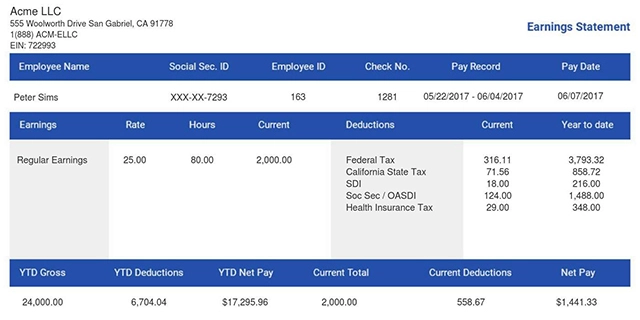
Many landlords accept pay stubs from self-employed workers, but those stubs need to be professionally formatted and accurate. A valid self-employed pay stub must include gross earnings, deductions for self-employment tax, Medicare and Social Security contributions, and net pay. Inconsistent or informal documents raise red flags during the review process.
You can create accurate, formatted stubs using our tools at ThePayStubs.com. Read our 1099 pay stub guide for guidance on what independent contractors need to include for deduction calculations and landlord-accepted formatting.
A few things to keep in mind:
- Create stubs that reflect consistent monthly income rather than irregular one-time payments.
- Keep stubs alongside your 1099s and tax returns as part of a complete income file.
- For mortgage applications, pay stubs are supplemental; tax returns remain the primary requirement.
When Is a 1099 Enough Proof of Income?
The answer depends on who's asking. For most rental applications, a 1099 combined with 2-3 months of bank statements is all you need. Landlords prioritize consistent deposits over detailed documentation.
Loan applications require more. Personal loan lenders usually accept a 1099 with a recent tax return. Mortgage lenders are the most thorough; they require complete tax returns, bank statements, and often a current profit and loss statement. Some lenders also offer personal loans for self-employed with no proof of income if your paperwork falls short.
Real-world 1099 proof of income scenarios:
- Uber or DoorDash driver: A 1099-K plus 3 months of bank statements covers most apartment applications.
- Freelance graphic designer: A 1099-NEC plus your most recent tax return works for most personal loans.
- Etsy seller: A 1099-K (issued in 2025 for sales above $2,500) plus bank statements handles most rental applications.
You Might Also Like
- Self-Employed? Here's How to Show Proof of Income
- Pay Stubs for Loan Applications
- Proof of Income If Paid in Cash
- How to Calculate Tax on 1099 Misc Income
- What Is Gross Monthly Income
Conclusion
Building a complete 1099 proof of income package means combining your 1099 forms with tax returns, bank statements, and a profit and loss statement. For rental applications, that combination is usually enough. For mortgage qualification, you'll need the full picture: 2 years of returns, recent bank records, and a current P&L.
A professional pay stub rounds out your income documentation and makes the review process smoother for landlords and lenders. Use our paystub generator to create accurate, formatted stubs in minutes, complete with self-employment deductions that meet most income verification standards.
- 1. Enter Your Information

- 2. Select Your Favorite Theme

- 3. Download Your Stub!

 By
By