

Personal Loans for Self-Employed With No Proof of Income (2026)
 By
By
Personal loans for self-employed with no proof of income are available, but qualifying works differently than it does for salaried employees. About 15 million Americans work as freelancers, independent contractors, and gig workers. None of them receive pay stubs or W-2 forms to show a lender. Many banks now accept tax returns, bank statements, and 1099 forms instead. This guide covers what documents to prepare, which loan types work best, and how to strengthen your application.
Key Takeaways
- Qualifying for personal loans for self-employed with no proof of income is possible; lenders accept tax returns, 1099s, and bank statements instead of a W-2.
- Most lenders prefer a credit score of 670 or higher and a debt-to-income ratio under 36%.
- Options include unsecured online loans, secured personal loans, SBA microloans, and co-signer arrangements.
- Prepare two years of tax returns, six months of bank statements, and a profit and loss statement before applying.
Can You Get Personal Loans for Self-Employed With No Proof of Income?
Yes, self-employed borrowers can qualify for personal loans without traditional W-2 proof of income. Lenders accept bank statements (3 to 12 months), tax returns, profit-and-loss statements, or 1099 forms as alternatives. Online lenders and credit unions are often more flexible than traditional banks. The key is showing stable income through any verifiable documentation.
Self-employed borrowers, including freelancers, independent contractors, and gig workers, aren't automatically disqualified from personal loans. Traditional banks may be stricter, but online lenders and credit unions have significantly broadened their criteria. Understanding how banks verify income helps you target the most flexible lenders.
Some lenders advertise loans that don't ask for proof of income in the traditional sense. These no-doc or no income verification loans come with higher APRs and lower limits than fully documented options.
Getting a personal loan for self-employed with no proof of income is most accessible at online lenders and credit unions. Even so, these loans still need something in return: a strong credit score, collateral, or a co-signer. A personal loan for self employed with no proof of income typically becomes easier to obtain once you've been self-employed for at least one year.
What Lenders Accept Instead of a W-2

The key to approval for personal loans for self-employed with no proof of income is alternative documentation that demonstrates consistent income. Different lender types have different thresholds:
| Lender Type | Most Accepted Documents |
|---|---|
| Traditional Banks | 2 years of tax returns, 6+ months of bank statements, P&L statement |
| Credit Unions | 1–2 years of tax returns, flexible with established member relationships |
| Online Lenders | 3–12 months of bank statements, 1099s; tax returns often optional |
Here's a checklist to prepare before you apply:
- Last 2 years of IRS-filed tax returns (all schedules, including Schedule C for sole proprietors)
- Last 6 months of bank statements from a dedicated business bank account
- Current profit and loss statement
- 1099 forms or recent client invoices
- CPA letter confirming self-employment income (if available)
- Free credit report from AnnualCreditReport.com: review it before any lender does
Having these documents ready before applying improves your approval odds and often results in a lower APR.
Types of Loans for Self-Employed With No Proof of Income
Personal loans for self employed with no proof of income come in several forms. Here's a breakdown of loans for self employed no proof of income options in 2026. Your best choice depends on credit score, documentation, and how long you've been self-employed:
- Unsecured personal loans: Online lenders offer the fastest approval and the most documentation flexibility. Lenders like SoFi and LightStream offer rates starting from 6.49%; Upgrade starts from 7.74%. Pre-qualify with 2 to 3 lenders to compare offers without triggering a hard credit pull. Most require a credit score of at least 620 to 640.
- Secured personal loans: Offering collateral (a car, savings account, or certificate of deposit) reduces lender risk and typically qualifies you for a lower APR. A solid choice if your credit score is below 670.
- SBA microloans: Up to $50,000 for self-employed individuals through the SBA microloan program. Approval takes longer, but rates are significantly lower than private lenders.
- Business line of credit: Borrow as needed rather than taking a lump sum. Well-suited for independent contractors and freelancers with project-based income.
- Peer-to-peer and fintech lenders: More flexible approval criteria for borrowers who are newer to self-employment, though rates tend to be higher.
Loans for Bad Credit With No Proof of Income
Here's what works when a low score and sparse documentation are limiting your application options:
- Secured loans are your strongest path. Collateral reduces lender risk enough to offset weak documentation.
- Credit unions take a relationship-based approach. An existing member may qualify based on account history rather than formal income proof.
- Peer-to-peer lenders accept applicants with fair credit, typically from 580 and up, though rates are higher.
Improving your credit score before applying makes a measurable difference. Moving from 580 to 640 opens more lender options and lowers available rates. If you build credit with a card first, check what proof of income for a credit card issuers expect.
How to Qualify for Personal Loans for Self-Employed With No Proof of Income

Getting approved for personal loans for self-employed with no proof of income is largely about preparation. Follow these five steps before you apply.
Step 1: Know Your Credit Score
Aim for 670 or higher. Self-employed borrowers face more credit scrutiny when income is harder to verify. Pull your free credit report at AnnualCreditReport.com, dispute any errors, and pay down high-balance revolving accounts before you submit any applications.
Step 2: Calculate Your Real Debt-to-Income Ratio
Lenders use net income, not gross monthly income; business deductions reduce what lenders count. Example: $80,000 in freelance earnings minus $20,000 in deductions equals $60,000 declared income, or $5,000/month. With $1,500 in monthly debt, your debt-to-income ratio is 30%, within the preferred 36% threshold.
Step 3: Build a 2-Year Track Record
Most lenders want two years of self-employment history. Under that mark? Offset with a 700+ credit score, strong collateral, or a co-signer with verifiable W-2 income. Learn how pay stubs for loan applications are evaluated so you know exactly what documentation to prepare when you're building your track record.
Step 4: Use a Dedicated Business Bank Account
Running all income through a separate business bank account creates a clean paper trail. Consistent, regular deposits carry significant weight with lenders that use bank statement underwriting.
Step 5: Add a Co-Signer If Needed
A co-signer with steady W-2 income can unlock better rates and improve your approval odds. Both parties carry equal legal responsibility for the loan, so only pursue this with someone who fully understands the commitment.
2026 update: In 2026, fintech lenders can verify cash flow by connecting to your bank via Plaid. Ask about alternative underwriting before assuming you need two full years of tax returns.
Do You Need Proof of Income for a Personal Loan?
Not always. Many lenders accept alternative income documentation instead of a traditional pay stub or W-2. Bank statements, tax returns, or a profit-and-loss statement typically work. Some newer lenders use cash-flow underwriting, analyzing direct deposits and transaction history rather than requiring formal income verification documents.
Traditional proof of income documents are always preferred, but not always required. Lenders weigh credit score, collateral, and debt-to-income ratio alongside documentation. Borrowers with a credit score above 720 sometimes qualify without any standard income verification at all.
You Might Also Like
- How to Write a Proof of Income Letter for Apartments
- Proof of Income If Paid in Cash
- What Is Annual Income
- How to File Taxes as a Freelancer
- W-2 vs 1099: How to File Taxes When You Have Both
Conclusion
Getting personal loans for self-employed with no proof of income requires more preparation than a standard loan application. But with the right documentation, a solid credit score, and the right lender, approval is achievable.
Start by pulling your credit report, calculating your real DTI, and gathering six months of bank statements. Pre-qualify with two or three lenders before committing to any offer.
Self-employed borrowers can also strengthen their applications by documenting income professionally. Use a reliable pay stub generator to create consistent, formatted income records that lenders want to see.
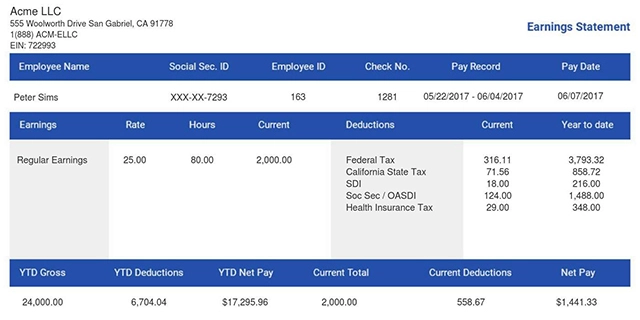
- 1. Enter Your Information

- 2. Select Your Favorite Theme

- 3. Download Your Stub!

 By
By