

How to Find Houses for Rent Without Proof of Income (2026)
 By
By
Finding houses for rent without proof of income is more achievable than most people think. Gig workers, retirees, freelancers, and digital nomads face this challenge every day. They have the money to cover rent, but they don't have a traditional pay stub or W-2 to show for it. Your employment status matters far less to most private landlords than your overall financial reliability. Knowing what counts as proof of income is the first step toward a strong application.
The good news is that houses give you a specific advantage over apartments. Most rental homes are owned by individual landlords who evaluate each application personally, not by automated screening software with hard income cutoffs. They can make exceptions, and they respond to phone calls.
This guide covers 8 proven strategies for getting approved for houses for rent without proof of income. You'll also find the exact documents landlords accept in place of pay stubs, and a clear savings target for 2026.
Key Takeaways
- Houses for rent are often owned by private landlords who have more flexibility than large corporate apartment management companies
- You can qualify without a pay stub by showing bank statements, savings, a co-signer, or a strong credit score
- The standard threshold: savings covering 6 months of rent gives most private landlords the confidence to approve you
- Self-employed and gig workers can create professional income documentation with ThePayStubs.com
- Can You Find Houses for Rent Without Proof of Income?
- Why Renting a House Is Different from an Apartment Without Proof of Income
- 8 Ways to Get Approved for Houses for Rent Without Proof of Income
- How Much Savings Do You Need to Rent a House Without Proof of Income?
- What Documents to Prepare for Houses for Rent Without Proof of Income
Can You Find Houses for Rent Without Proof of Income?
Yes, especially for houses. Most single-family rental homes are owned by private landlords, not corporations. Private landlords make case-by-case decisions based on your financial stability, credit score, and savings, not just a pay stub. Gig workers, retirees, freelancers, and people between jobs can all qualify with the right documentation.
The approval criteria private landlords use are considerably more flexible than the standard 3x income rule you'll find at managed apartment complexes. Most individual landlords ask a simpler question: can this tenant reliably pay every month? Tenants can get approved without traditional income documents by demonstrating financial stability through other means.
Retirees, students with family co-signers, freelancers with consistent billings: all of them can qualify for houses for rent without proof of income. Understanding which proof of income documents carry the most weight with landlords helps you build the strongest possible application. Your job title isn't on the lease; your signature is.
Why Renting a House Is Different from an Apartment Without Proof of Income

When you apply to most apartment complexes, you're dealing with corporate property management. These companies use automated screening software that enforces hard income thresholds. If your application doesn't meet their income-to-rent ratio, the algorithm rejects it. On-site managers can't override the system even if they see a strong applicant in front of them. These strict proof of income for apartment requirements leave little room for negotiation.
Houses operate differently. The majority of single-family rentals are owned by individual investors and private homeowners who manage their own properties. These landlords make all landlord approval decisions personally. Take a digital nomad with freelance income, a retiree downsizing from a sold home, or a gig worker with steady multi-source earnings. All of them can expect a real conversation rather than an automated rejection.
For renters specifically looking for houses for rent without proof of income, this private ownership reality is a significant advantage. Private house landlords also tend to care about the property itself, not just the financials. They want a tenant who'll maintain the home and communicate well. That personal relationship carries weight in a way it never could with a corporate rental office.
Finding these landlords is straightforward. On Zillow, Facebook Marketplace, and Craigslist, filter specifically for owner-listed or private landlord rentals. Suburban and rural houses tend to have even more flexible landlord approval criteria than properties in dense urban cores. Call before you email. Personal contact builds the rapport that makes private landlords confident in non-traditional applicants.
8 Ways to Get Approved for Houses for Rent Without Proof of Income
Getting approved without a pay stub means building a case from other evidence. The goal is to demonstrate the same thing a pay stub would: that you can reliably cover rent every month. Each strategy works on its own. Combining two or three creates a significantly stronger application for houses for rent without proof of income.
1. Show Alternative Income Documents
Start by gathering what you actually have. Tax returns (Form 1040) from the last two years reflect your annual earnings clearly. If you do freelance or gig work, 1099 forms are official records of contract earnings. Retirees can submit Social Security award letters, pension account statements, or investment dividend statements. The key is combining two or three records to tell a complete financial story. Three months of bank statements alongside a recent 1099 is often more convincing than a single pay stub from a part-time position.
2. Offer Upfront Rent or a Larger Security Deposit
Offering two to three months of rent upfront immediately reduces perceived risk for your landlord. It demonstrates that you have the funds available and that you're serious about the tenancy. Frame it as a straightforward business arrangement: "Here are three months of rent to start. I'd like to move to a standard monthly schedule from there." One important note: check your state's tenant protection laws before making this offer. Some states cap security deposits at one or two months' rent, so structure the payment correctly to avoid complications down the road.
3. Use a Co-Signer or Guarantor
A co-signer is listed on the lease and shares legal responsibility for rent. If you miss a payment, your co-signer is equally liable. A guarantor agreement is different: the guarantor only steps in if you default and has no right to occupy the home.
Private house landlords often respond especially well to co-signers because it creates a clear personal relationship and direct accountability. Third-party guarantor services are available if family or close friends aren't an option. Your co-signer needs good credit and verifiable income. Choose someone whose finances are in solid shape before listing them on an application.
4. Maintain a Strong Credit Score
A credit score above 700 is one of the most effective substitutes for income documentation. It tells a private landlord that you consistently meet your financial obligations. Here's a real example of how landlord approval criteria play out. A 750-score applicant with $12,000 saved often looks more attractive than a 590-score employed applicant with a thin bank balance.
Pull your free credit report at annualcreditreport.com before you start applying. Check it carefully for errors. A disputed collection or incorrectly reported late payment could be pulling your score down unnecessarily, and corrections can take 30 to 60 days to process.
5. Provide Bank Statements and Savings Proof
Three to six months of bank statements are the most commonly accepted alternative to a pay stub. Landlords look for consistent deposits, a stable or growing balance, and no large unexplained withdrawals. Your assets should be front and center: if you've maintained a balance above $15,000 for six consecutive months, highlight that clearly in your cover letter. Here's a closer look at using bank statements as proof of income.
A bank balance covering at least six months of your target rent is the practical floor for most private landlords. Regular inflows from multiple sources, such as gig work, investment dividends, or freelance payments, can actually be more reassuring than a single employer deposit. It shows your income isn't dependent on one fragile source.
6. Highlight Your Rental History and References
Past landlord references are among the most persuasive documents you can include. A written reference from a previous landlord independently confirms your reliability as a tenant, completely separate from your employment status. Payment receipts and lease renewal history carry similar weight, since renewals show a landlord chose to keep you after getting to know you.
If you're a first-time renter with no rental history, character references from an employer, community leader, or university adviser can fill the gap. Include a brief cover note with each reference explaining the context and how long you've known them. Private house landlords read these carefully because they're choosing someone to live in their home, not just their investment property.
7. Be Honest and Transparent
Private landlords appreciate directness. Don't bury your non-traditional income situation in your application. Address it head-on with a simple opener: "I'm self-employed and don't carry a standard pay stub. I've prepared six months of bank statements and my last two tax returns. I'd be happy to walk you through them." This framing signals reliability and confidence. Most private landlords respect the honesty, and starting the conversation this way sets a positive tone for the landlord-tenant relationship before you've signed anything.
8. Generate Proof of Income with ThePayStubs.com
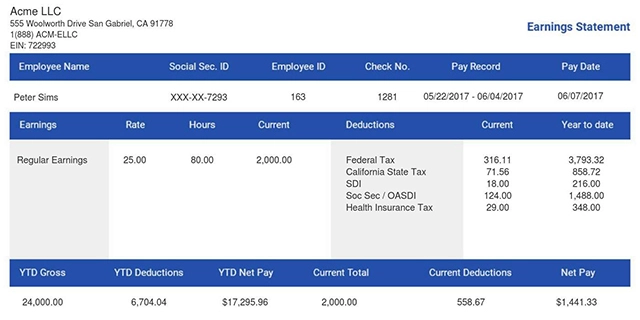
The challenge for self-employed renters isn't earning income; it's having the right documentation to show a landlord. If you're a 1099 contractor, a freelancer, or a side business owner, ThePayStubs.com lets you create professional pay stubs that clearly document your income. These are accepted by many private landlords as legitimate proof of self-employment income. The process takes minutes, and the result looks exactly like what a traditional employer would provide.
How Much Savings Do You Need to Rent a House Without Proof of Income?

Plan for at least 6 months of rent and utilities. If your target house rents for $1,500/month and utilities run $200, you need roughly $10,200 in accessible savings. Most private landlords feel confident approving an applicant who shows a stable bank balance covering 6 months of costs, especially paired with a credit score of 700 or higher.
The 6-month rule is a practical starting point. Understanding your gross monthly income helps you calculate the savings ratio landlords are looking for. Use this formula to find your personal target: (monthly rent + estimated monthly utilities) x 6 = target savings. Here's how that plays out at different rent levels:
| Monthly Rent | Utilities Estimate | Target Savings (6 Months) |
|---|---|---|
| $1,200 | $150 | $8,100 |
| $1,500 | $200 | $10,200 |
| $1,800 | $200 | $12,000 |
| $2,200 | $250 | $14,700 |
Apply this formula to any target price point: the same multiplier works for houses for rent without proof of income at every rent level. If your finances allow it, a 12-month buffer turns most borderline decisions into clear approvals. Combined with a 730+ credit score, that level of documented financial stability is among the strongest applications any private landlord will see. One important note: factor your full monthly living expenses, not just rent and utilities. Otherwise you might project savings that deplete faster than expected once you move in.
What Documents to Prepare for Houses for Rent Without Proof of Income
Landlords who accept applications without standard pay stubs aren't flying blind. They're substituting one form of financial evidence for another. Here's a complete checklist of what private house landlords commonly accept:
- Bank statements (last 3-6 months): proves liquidity and consistent cash flow
- Tax returns (Form 1040, last 2 years): proves income history over time
- 1099 forms: proves freelance or contract income
- Social Security award letter: proves a fixed monthly income for retirees
- Pension or retirement account statements: proves passive income sources
- Investment account statements (dividends, interest): proves asset-based income
- Offer letter from an upcoming employer: proves imminent employment
- Unemployment benefit statement: proves temporary fixed income during a transition
- Court-ordered payment documentation (alimony, child support): proves recurring income
- Profit and loss statement (self-employed): proves business income
- Professional pay stubs: accepted documentation for self-employed renters who generate them through ThePayStubs.com
The Renter's Package Tip: Combine your top three documents into a single clean PDF with a one-page cover letter and a printed credit report. Private house landlords aren't professional screeners; making their decision easy dramatically improves your chances. A well-organized package signals the same reliability as the documents inside it.
For renters who receive cash payments or run informal businesses, proof of income if paid in cash follows different conventions — bank deposit history and client contracts become your primary evidence. Formal employment verification is another option that works well when you have a previous employer or current client who can confirm your income history.
When searching for houses for rent without proof of income near me, filter listing platforms specifically for owner-listed or private landlord rentals. Call landlords directly before submitting a formal application. Building a quick phone rapport first can make all the difference when your application looks unconventional on paper.
You Might Also Like
- W-2 vs 1099: How to File Taxes When You Have Both
- Pay Stubs for Loan Applications
- What Is Annual Income
- How to Calculate W-2 Wages From a Pay Stub
- Pay Stubs for Rental Applications
Conclusion
Houses for rent without proof of income are more accessible than most people realize. Private landlords make individual decisions. A well-prepared application with bank statements, savings documentation, a strong credit score, and solid references can be just as convincing as a traditional pay stub.
Your goal is to demonstrate financial reliability, not employment. Use the 6-month savings formula, assemble a clean document package, and address your situation directly in conversation with the landlord. That combination works.
Need professional income documentation for your rental application? Use our paystub generator to create accurate, landlord-accepted pay stubs in minutes. A well-documented application gives any private landlord exactly what they need to say yes.
- 1. Enter Your Information

- 2. Select Your Favorite Theme

- 3. Download Your Stub!

 By
By