

Proof of Income Letter: Templates, Examples & Writing Guide
 By
James Wilson
By
James Wilson A proof of income letter comes up at life's most important financial moments. These include applying for an apartment, qualifying for a loan, and opening a line of credit. If you're an employer writing one for a team member, or an employee requesting one from HR, knowing exactly what to include saves everyone time. If you're unsure what counts as proof of income, start with that overview first.
This guide covers what the letter is, what to include, how to write it, and ready-to-use templates for the three most common situations. If you also need professional pay stubs to support an application, our generator creates them in minutes.
Key Takeaways
- A proof of income letter confirms employment status and salary, used for rental, loan, and credit applications
- Include the employee's full name, job title, salary, employment dates, and a direct employer contact number
- Landlords typically require income equal to at least 3 times the monthly rent (the 3x rent rule)
- Self-employed individuals can write their own letter and support it with tax returns, 1099 forms, or pay stubs
- Always save and send as a PDF on company letterhead for best acceptance rates
What Is a Proof of Income Letter?
A proof of income letter is a formal document that confirms a person's employment status and earnings. It's also called an income verification letter or salary verification letter. Lenders and landlords use it to verify you can meet payment obligations. For rentals, income is typically required at 3 times the monthly rent.
It's one of the most commonly requested documents when renting an apartment, applying for a mortgage, or qualifying for a personal loan. Other names include letter of income verification, verification of income letter, and employment income verification letter. Regardless of what the requesting party calls it, the content and purpose are identical.
What is income verification, exactly? It's the process by which a lender or landlord confirms earnings are sufficient. The letter is the most widely accepted method, but other proof of income documents may also be required.
What to Include in a Proof of Income Letter

Every proof of income letter from employer to employee follows a three-part structure: header and recipient information, employee details, and employer contact. Missing any section is the most common reason letters get rejected.
Header and Recipient Information
Start with the date, the recipient's full name and title, and their organization's name and address. Include a direct phone number — a missing contact creates delays and often gets letters rejected outright.
Employee Details
This is the core of any income verification letter from employer to employee. Include:
- Full name as it appears on official records
- Official job title and employment status (full-time, part-time, or contractor)
- Start date and, for former employees, an end date
- Annual salary or hourly wage, plus pay frequency
- Any regular bonuses or commissions
An employee income verification letter with specific figures carries much more weight than a vague one. Landlords use gross monthly income to apply the 3x rent rule: your monthly income should be at least three times the rent. Banks use annual salary to calculate debt-to-income ratio, which most lenders cap at 43% for loan approval.
Employer Contact Information
Close with the company's name, physical address, and the signatory's direct phone number and email. Write the letter on company letterhead, it signals legitimacy and is one of the simplest ways to improve acceptance rates.
How to Write a Proof of Income Letter
To write one, include a date, recipient details, and a RE: line stating the verification purpose. In the body, list the employee's full name, job title, employment status, start date, and annual salary or hourly wage. Close with a verifiable signature on company letterhead. Save as PDF and allow 2 to 3 business days for HR to process requests.
Follow these steps for a professional result:
- Format the header. Date the letter at the top left, then add the recipient's name, title, and address below.
- Add a RE: line. For example: "RE: Employment and Income Verification for [Employee Full Name]."
- Open with purpose. First sentence: "I am writing to confirm employment and income for [Full Name], who has worked at [Company] since [Date]."
- Detail the employee's information in the body (see the section above for the full element list).
- Add a disclaimer. "All information above is accurate to the best of my knowledge."
- Close formally. Use "Sincerely," then sign above your typed name and title.
Send the final letter as a PDF on company letterhead. Saving it as a proof of income letter PDF preserves formatting and looks more professional. For large transactions like a mortgage, a notarized copy adds credibility with most lenders. Pay stubs can also help speed up loan approval.
Proof of Income Letter Template and Sample

No two situations call for the same format. Here are three proof of income letter samples and an income verification letter sample for each scenario. Customize the bracketed fields before sending.
Sample 1: Rental Application
Use this proof of income letter sample when a landlord requests documentation. Lead with gross monthly income so they can apply the 3x rent rule quickly. Include: full name, job title, gross monthly and annual salary, start date, and your direct phone number. For a deeper walkthrough, see our guide to writing a proof of income letter for apartments.
Sample 2: Bank Loan or Credit Application
This income verification letter example focuses on annual salary, employment type (permanent or contract), and tenure. Banks use these figures to calculate debt-to-income ratio. Use this proof of income template when a lender's form asks for formal written confirmation of income.
Sample 3: Self-Employed Writing Your Own Letter
Use this income verification letter template when you don't have an employer to write it for you. State your business name, your role, and gross annual income for the most recent year.
For all three formats, save as a PDF before sending.
Self-Employed Proof of Income Letter
Self-employed individuals write their own letter, stating their business name, role, and income figures (monthly and annual). Attach supporting documents: the most recent two years of federal tax returns, bank statements showing regular deposits, and 1099 forms. Having a CPA co-sign the letter significantly increases its credibility with banks and landlords.
Because there's no employer to write it, a proof of income letter self-employed individuals prepare themselves must lean on supporting documents to fill the credibility gap. Here's what to attach:
- Federal tax returns (last 2 years; Schedule C for sole proprietors)
- Bank statements showing regular deposits
- 1099 forms from clients for the most recent tax year
- Profit and loss statement for the current year
A CPA co-signature on a self employed proof of income letter is the strongest credibility boost available, and many mortgage lenders require it. Pair your own letter with a CPA income verification letter when applying for larger loans. If you currently have no earnings, a proof of no income letter follows a similar self-written format.
Need more documentation strategies for freelancers? Our guide to self-employed proof of income covers every method lenders and landlords accept.
Other Income Verification Documents
A proof of income letter is often submitted alongside other employment verification and proof of income documents. Common supporting items include:
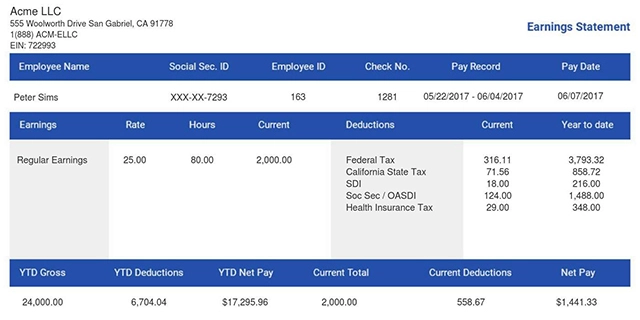
- Pay stubs from the past 2 to 3 months
- W-2 forms from the prior year
- 1099 forms for freelancers and contractors
- Federal tax returns for longer income history
- Bank statements for the last 3 to 6 months
- Social security income verification letter from SSA.gov, also known as an award letter, for retirees or disability recipients
- Proof of income form some institutions have their own standardized forms they ask employers to complete
In 2026, many large employers participate in The Work Number, a digital income verification service operated by Equifax. If your employer is enrolled, verifiers can pull real-time employment data instantly instead of waiting for a paper letter. Check theworknumber.com to see if your employer participates.
You Might Also Like
- Pay Stubs for Loan Applications
- What Is Annual Income?
- Proof of Income If Paid in Cash
- Pay Stub for an Auto Loan
- Do Banks Verify Pay Stubs?
Conclusion
A proof of income letter is straightforward once you know what's required. That means recipient details, employment information, salary, and a verifiable contact. The templates above cover the three most common situations.
If you're self-employed, use a reliable paystub generator to create professional pay stubs. They support your income verification letter and are widely accepted as supplementary proof of income.
- 1. Enter Your Information

- 2. Select Your Favorite Theme

- 3. Download Your Stub!

 By
By