What Are Floating Holidays? Pay, Rules & PTO (2026)
 By
What are floating holidays, and why does your offer letter list them apart from vacation? They're paid days off you get to schedule yourself. The company doesn't pick the date. You do.
Below, you'll see how they work, how they compare with PTO, and how they're paid. You'll also see how the hours look on pay stubs, which matters for proof of income and for small business payroll.
Key Takeaways
- Floating holidays are paid days off you schedule yourself, usually two per year.
- They're separate from PTO and often expire at the end of the calendar year.
- No federal law requires them, so your company policy sets every rule.
- Floating holiday hours show as their own earnings line on your pay stub.
What Are Floating Holidays?
Floating holidays are paid days off that you schedule yourself instead of on a date the company picks. Most employers give one to four a year, usually two. You can use one for a birthday, a religious or cultural day, or any day your policy allows.
The U.S. has 11 federal holidays in 2026, but many workers observe days that aren't on that list. A floating holiday fills the gap without eating into vacation days.
Some handbooks shorten the name to float holiday. Others call it a floating day. Retail schedules often say float day. Whatever the label, the float holiday meaning is the same: the date "floats" until you pin it down. You'll see that floating day meaning in union contracts and HR software too.
What Is Floating Holiday Time Off and How Does It Work?

Floating holiday time off is a small, separate bank of paid days, usually granted at the start of the calendar year. You request the date in advance, your manager approves it, and the day is paid at your normal rate. Unused days often expire December 31.
Here's how a typical plan runs:
- You get your days. Most companies give two floating days on January 1. New hires are often prorated: two for a spring hire, one for a fall hire.
- You pick a date. Submit it through your time-off request system, like a vacation request.
- Your manager signs off. Many plans ask for one to two weeks of notice.
- The day comes off your balance. You're paid as usual.
Most leave policies use a "use it or lose it" rule. A few employers allow carryover or pay out unused days.
What Are Floating Holidays Used For?
Employees take floating holidays for days the company calendar skips: a religious holiday like Diwali or Yom Kippur, a cultural event, a birthday, or an extra day off next to a federal holiday. Some policies limit the reasons.
Quick tip: pair a floating day with a federal holiday. Taking Friday, September 4 before Labor Day gives you a four-day break, and it doesn't touch your paid time off.
Floating Holidays vs PTO: Key Differences

PTO is a larger bank you build up over time. Floating holidays are a fixed handful of days handed out up front.
| Feature | Floating Holiday | PTO | Paid Holiday |
|---|---|---|---|
| Who picks the date | You | You | The company |
| Typical amount | 1 to 4 days | 10 to 20 days | 6 to 11 days |
| How you get it | Up front | Accrues | Fixed calendar |
| Rolls over | Rarely | Often | No |
| Paid out at exit | Policy and state | Often | No |
The biggest gap is flexibility. When you take time off with PTO, you can use it for illness, travel, or errands. Floating days often come with a list of approved reasons. Personal days sit in between.
Are Floating Holidays Paid?
Yes, floating holidays are paid when your employer offers them as a paid benefit, which is almost always the case. No federal law requires holiday pay, so the policy sets the rules. You're normally paid your regular rate for your scheduled hours, usually eight.
The U.S. Department of Labor confirms the Fair Labor Standards Act doesn't require pay for time not worked, including holidays. Once a company promises paid leave like this, it has to follow its own policy.
The pay is taxed like any other wages, with federal income tax, Social Security, and Medicare withheld. Overtime is different. Paid hours for a holiday you didn't work don't count as hours worked under 29 CFR 778.218. So if you work 32 hours and take an 8-hour floating day, you're paid for 40 hours, but none of it is overtime under federal rules.
How Floating Holiday Hours Show on Your Pay Stub
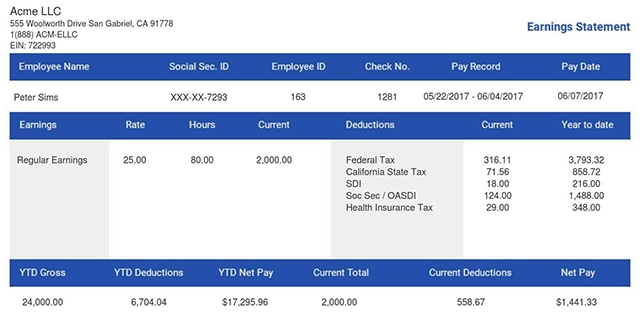
These hours usually appear as a separate earnings line, such as "Floating Holiday" or "FH," with hours, rate, and amount. Many stubs also list your remaining balance.
A landlord or lender sees the same gross pay, and the label explains why regular hours dipped. If your employer's stubs don't break this out clearly, you can make detailed pay records with our pay stub templates.
Can Your Employer Deny or Take Back a Floating Day?
Yes. Employers can deny a floating holiday request for blackout dates, short staffing, or a reason the policy doesn't allow, and they can let unused days expire. Religious requests need care, because federal law requires reasonable accommodation unless it causes undue hardship.
Payout when you quit depends on your state. In California, it comes down to how the policy is written. If you can use the day for any reason, it's treated like vacation and must be paid in your final check. If it's tied to a set event, like your birthday, it usually isn't owed.
What Are Floating Holidays Worth to a Small Business?
For a small business, floating holidays are a low-cost perk. Two paid days per worker costs less than new company-wide closures, and staff members honor their own days while you stay open.
They also help your benefits package stand out when you're hiring. Put these rules in a written policy first:
- Eligibility and days per person
- Proration for new hires
- Notice required
- Blackout dates
- Rollover or payout
Then add a separate earnings code in payroll so every stub shows the day clearly.
You Might Also Like
- How Much PTO Do You Get?
- Pay Stubs for Loan Applications
- How to Read Pay Stub Deduction Codes
- How to Get an Earnings Statement
- What Is Unlimited PTO?
Conclusion
So, what are floating holidays in practice? They're paid days off on dates that matter to you. They're usually two per year, paid at your normal rate, and gone if you don't use them. Need clean, detailed records of that pay for a rental or loan application? Create one in minutes with our paystub generator.
- 1. Enter Your Information

- 2. Select Your Favorite Theme

- 3. Download Your Stub!

 By