PTO Meaning Job Seekers Need: Paid Time Off Explained (2026)
 By
You spot "PTO" in a job post, an offer letter, or a line on your pay stub. But how many days is it, and how do you earn it? This guide breaks down the PTO meaning job seekers and workers run into every day. You will learn what PTO covers, how it builds up, how to turn hours into days, and how it shows up in payroll. Small business owners get the same rules from the other side of the desk, plus tips for showing PTO on a pay stub template.
Key Takeaways
- PTO stands for paid time off: hours your employer pays you for when you are not working.
- Most workers earn PTO a little at a time, often 1 hour for every 30 or 40 hours worked.
- Divide your PTO hours by your shift length to see how many days off you have.
- No federal law requires PTO, but about 20 states require paid sick leave.
- What Is PTO? The PTO Meaning Job Offers Use
- What Is PTO Used For?
- How PTO Works: The PTO Meaning Job by Job
- Accrued Time Off: What Accrued PTO Means
- PTO Accrual Rate: How Much PTO Do You Get?
- How to Calculate PTO
- How Does PTO Work for Hourly Employees?
- What Is PTO in Payroll? Reading PTO on Your Pay Stub
- Is PTO Required by Law?
What Is PTO? The PTO Meaning Job Offers Use
PTO means paid time off. It is time away from work that your employer still pays you for, at your normal rate. Many companies put vacation, sick days, and personal days into one bank of hours. You can use that bank for almost any reason, as long as you follow the request rules in your policy.
So, what is PTO at work in practice? It is a benefit, like health insurance, and your employer sets the rules. Employers track PTO time off in hours, not days, because shifts vary in length.
What does PTO mean in work settings that split leave into buckets? Here, "PTO" is often a catch-all word for all paid leave. Either way, the core PTO work meaning stays the same: you get paid even though you are not on the clock. That is the PTO meaning job seekers should keep in mind when they compare offers.
What Is PTO Used For?

PTO is used for any paid day off your employer approves. That includes vacation time, sick time, personal days, and paid holidays. Some employers also pay for bereavement leave, parental leave, and jury duty. A single PTO bank lets you use the same hours for all of them.
Here are the most common uses:
- Vacation time: Planned trips or rest, often booked weeks ahead.
- Sick time: Days you are ill, hurt, or caring for a sick family member.
- Personal days: Moving, a school event, or a mental health day.
- Paid holidays: Days like Thanksgiving when the business closes.
- Bereavement leave: Time to grieve after a death in the family.
- Parental leave: Paid time after a birth or adoption, including maternity leave.
- Jury duty: Time to answer a court summons.
Some leave is unpaid. The Family and Medical Leave Act (FMLA) gives eligible workers up to 12 weeks of job-protected leave, but it does not have to be paid. Many employers let you use PTO during it.
How PTO Works: The PTO Meaning Job by Job
How does PTO work? It depends on the policy your employer picks. Most plans fall into one of three types, and yours decides how much time you can take off work.
Traditional Paid Time Off
Older-style plans split your leave into separate balances. For example, you might get 10 vacation days, 5 sick days, and 2 personal days. You can't use sick days for a beach trip. You'll mostly see this setup at larger, older companies.
PTO Bank
All paid leave goes into one pool of hours. You decide how to use it. This is how PTO works at many small businesses, since there is only one balance to track. The catch: some people save every hour for vacation and come in sick.
Unlimited PTO
Here, there is no set cap. You take a day off when your work is covered and your manager approves. There is also no balance to pay out when you leave. It sounds great, but with no set number to aim for, some people end up taking less time off, not more.
Some employers also "front-load" PTO. You get the full year of hours on day one instead of earning them over time.
Accrued Time Off: What Accrued PTO Means

Accrued PTO is paid leave you have earned but not used yet. Here is the accrued hours meaning in plain words: each hour you work adds a small slice of paid leave to your balance. The accrued PTO meaning is the same idea, just tied to your PTO bank.
How does PTO accumulate? Most plans add hours each pay period, based on the hours you worked. Others add a set amount each month, such as 8 hours.
Do you accrue PTO while on PTO? It depends on the policy. Some plans count only hours worked, so you earn nothing during a day off. Others count all paid hours, so PTO hours earn PTO too. Check your handbook or your pay stub to see which rule applies.
Many plans also cap your balance, for example at 1.5 times your yearly amount. Once you hit the cap, you stop earning until you use some.
PTO Accrual Rate: How Much PTO Do You Get?
It depends on your employer, your hours, and your tenure. Federal data gives a good benchmark for comparing any offer. In March 2026, private-sector workers got an average of 11 paid vacation days after 1 year of service, plus 7 paid sick days.
Your PTO accrual rate is how many PTO hours you earn per hour worked. Two rates are common:
- 1 hour per 40 hours worked: About 52 hours, or 6.5 days, a year for full-time staff.
- 1 hour per 30 hours worked: About 69 hours, or 8.7 days, a year.
Rates also climb with tenure. BLS data shows vacation rising to 16 days after 5 years and 20 days after 20 years.
So, what is a good PTO accrual rate? For a full-time role, 18 or more days of vacation and sick time in your first year matches or beats the average. Ask for the accrual rate in writing before you accept. It turns the PTO meaning job offers promise into real numbers.
How to Calculate PTO
One simple formula does the job:
Hours worked ÷ accrual rate = PTO hours earned
Example 1: Dana works full time in a warehouse. She works 40 hours a week for 52 weeks, or 2,080 hours. She earns 1 hour per 40 worked, an average PTO accrual rate for hourly jobs. 2,080 ÷ 40 = 52 hours of PTO a year.
Example 2: The same rate, split by paycheck. Dana is paid every two weeks, so she gets 26 paychecks a year on her biweekly pay stub. 52 ÷ 26 = 2 hours of PTO added to each stub.
What is PTO hours on a pay stub? It is your leave counted in hours. The PTO hours meaning matters because a "day" depends on your shift. Use this table for 8-hour shifts:
| PTO Hours | Days Off (8-hour shifts) | Work Weeks |
|---|---|---|
| 40 | 5 | 1 |
| 80 | 10 | 2 |
| 120 | 15 | 3 |
| 160 | 20 | 4 |
So 120 hours of PTO is how many days? It is 15 days, or 3 full work weeks.
Tip: Divide by your real shift length. If you work 10-hour shifts, 120 hours gives you 12 days off, not 15.
How Does PTO Work for Hourly Employees?
Hourly employees usually earn PTO for every hour they clock, often 1 hour per 30 or 40 hours worked. When you take PTO, you get your normal hourly rate for those hours. So how do you accumulate PTO as an hourly worker? Every shift you work adds a little more to your balance.
Do hourly employees get PTO? Often, yes, but no federal law requires it. Many states do require paid sick leave for hourly workers.
Does part-time get PTO, too? In many cases, yes. A part-time retail worker at 20 hours a week earns about 26 hours a year at the 1-per-40 rate. If you are weighing two hourly offers, compare the PTO meaning job by job, not just the pay rate.
One rule surprises people. PTO hours do not count toward overtime. Under federal overtime rules (29 CFR 778.218), vacation and sick pay is not pay for hours worked. If you work 32 hours and take 8 hours of PTO, you get 40 hours of pay but no overtime.
What Is PTO in Payroll? Reading PTO on Your Pay Stub
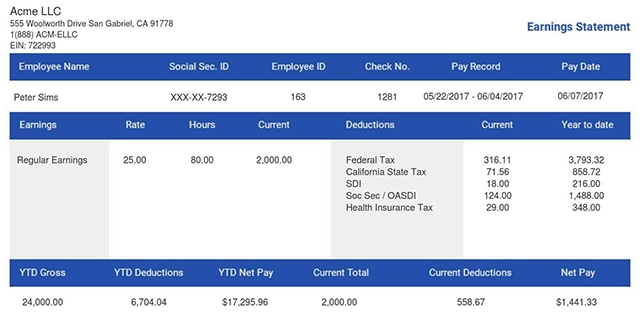
In payroll, PTO is a separate earnings line that pays you for hours you did not work. Your stub shows the PTO hours used, the rate, and the dollar amount. Many stubs also list hours earned this period, hours used, and your remaining balance.
PTO pay is taxed like regular wages. Federal income tax, Social Security, and Medicare all come out of it.
This is a side of the PTO meaning job seekers often miss. Your stub proves what you earned and used, which makes it useful proof of income. Renters and loan applicants can show steady pay even in a week with a day off, because PTO counts as earnings.
For small business owners, the same lines matter. Picture a bakery owner with six hourly staff. Each stub should show PTO hours apart from regular hours, which helps settle disputes and back up final pay.
Tip: Check Your Accrual Line Every Payday
Compare the hours added on each stub to your policy rate. If you should earn 2 hours per check but see 1.5, ask payroll right away.
Is PTO Required by Law?
No federal law requires PTO for private employers. The Department of Labor says the Fair Labor Standards Act does not require pay for time not worked, such as vacations or holidays. Instead, state laws and your employer's written policy set most of the rules.
States fill some of the gap. About 20 states plus Washington, D.C., require paid sick leave. Nebraska and Alaska joined in 2025. A few states also control payout. California, for example, treats earned PTO as wages. Under Labor Code 227.3, employers must pay out unused hours at the end of the job. "Use it or lose it" rules are not allowed there.
The PTO meaning your job offers can change if you move states, so check your state labor department for local rules.
You Might Also Like
- How to Calculate PTO
- How to Calculate Your Hourly, Weekly, and Monthly Income
- Pay Period Breakdown
- Proof of Income Documents: 6 Instances You'll Need a Pay Stub
- How to Read Pay Stub Deduction Codes
Conclusion
Now you know the PTO meaning job listings and pay stubs use. PTO is paid time off, earned in hours, and your policy sets the rate, cap, and payout rules. Track your balance on every stub so you can plan time off with confidence. If you run a small team or work for yourself, clear records matter just as much. Use our pay stub generator to create accurate stubs that show regular pay, PTO hours, and taxes in one place.
- 1. Enter Your Information

- 2. Select Your Favorite Theme

- 3. Download Your Stub!

 By