

Do You Need Proof of Income for a Credit Card? (2026)
 By
By
Most people expect a credit card application to work like a loan: submit your documents, wait for approval. That's rarely how it goes. Do you need proof of income for a credit card? For most applications, you don't submit formal documents upfront; income is self-reported.Under the CARD Act of 2009, issuers must assess your ability to repay before approving a new account or raising your credit limit. If you're self-employed, a professional pay stub generator documents the income you report. What you report shapes your credit limit, your approval odds, and how lenders see you as a borrower over time. This guide covers what qualifies as income, what doesn't, how verification works, and your options if income is limited.
Key Takeaways
- Credit card issuers require annual income disclosure on every application; formal proof documents aren't always required upfront
- Income includes wages, freelance earnings, Social Security distributions, and a spouse or partner's income for applicants 21 and older
- Under-21 applicants must show independent income under CARD Act rules; a parent's salary doesn't qualify without a cosigner
- Inaccurate income reporting can result in card revocation or a post-approval account review
- Self-employed applicants can use a paystub generator built for the self-employed to present earnings in a format lenders recognize
- Do You Need Proof of Income for a Credit Card?
- What Qualifies as Proof of Income for a Credit Card?
- Income Rules by Age Under the CARD Act (18–20 vs. 21+)
- Understanding Your Debt-to-Income Ratio for Credit Card Approval
- Will the Credit Card Company Verify Your Proof of Income?
- Income Sources That Don't Count on a Credit Card Application
- Options If You Have No or Low Income for a Credit Card
- Conclusion: Do You Need Proof of Income for a Credit Card?
Do You Need Proof of Income for a Credit Card?
Credit cards don't typically require you to submit income documents upfront; most applications are self-reported. However, the CARD Act of 2009 requires issuers to assess your ability to repay before approving your account. That means providing an accurate income figure is essential, even if no one asks for a pay stub at application.
Do credit cards ask for proof of income as a mandatory upload? Rarely. But what you report still drives real decisions. Your income works alongside your credit score, credit report, job status, and payment history. Together they tell the issuer how much credit you can handle.
Requirements differ by card type. A secured credit card typically has no income threshold. Premium travel cards set expectations higher. Capital One Savor requires income to exceed housing costs by at least $425 per month. Wells Fargo's Autograph Card requires income sufficient to support a minimum $1,000 credit limit.
You'll also provide your Social Security number so the lender can pull your credit report alongside your income disclosure.
What Qualifies as Proof of Income for a Credit Card?
Income for a credit card application goes beyond a salary. Issuers accept wages, freelance earnings, Social Security income, and retirement payouts. Investment dividends, regular allowances, and, if you're 21 or older, a spouse or partner's income also qualify. Scholarships and grants count too, minus tuition costs.
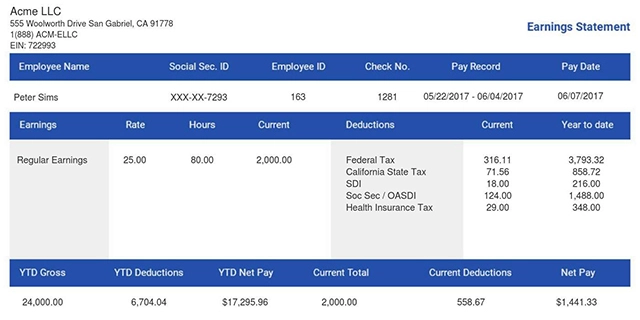
What counts as proof of income for credit card applications comes down to regular, accessible earnings. Employees have a straightforward path: two recent pay stubs and a prior-year tax return cover most requests. Self-employment income qualifies too, but requires a bit more preparation.
Income Documentation to Have Ready
Gather these before you apply:
- Prior-year tax return
- Two recent pay stubs (employees) or a formatted pay stub (freelancers and gig workers)
- Bank statements showing regular deposits
If you're self-employed or do contract work, a paystub generator helps present your freelance income in a format that lenders readily recognize alongside your 1099s or Schedule C.
Income Rules by Age Under the CARD Act (18–20 vs. 21+)
The CARD Act requires issuers to confirm ability to repay before approving any account. Age determines which income sources count.
Ages 18–20: Independent Income Required
If you're under 21, you must show independent income: wages, freelance pay, or regular allowances deposited directly to your own bank account. A parent's income doesn't count unless they cosign, and most major issuers no longer accept cosigners. Our guide to proof of income for students covers which earnings qualify.
Ages 21 and Older: Household Income Counts
Once you turn 21, you can list household income. A spouse's or domestic partner's income qualifies if you have reasonable access to the funds. In community property states, spouses legally share income, which simplifies what you can report.
Understanding Your Debt-to-Income Ratio for Credit Card Approval
Your debt-to-income ratio (DTI) is your total monthly debt payments divided by your gross monthly income. Lenders use it to gauge how much of your earnings are already committed.
Real example: $1,600 in monthly debt payments (car plus student loans) divided by $2,500 gross income equals 64% DTI. That's too high for most cards. Raise income to $3,700 and the same debt drops to 43% DTI.
The Consumer Financial Protection Bureau recommends keeping DTI at 36% or lower for most borrowing. Many issuers treat 43% as a practical ceiling. Paying down minimum monthly payments on existing accounts before applying improves both your approval odds and your potential credit limit.
Will the Credit Card Company Verify Your Proof of Income?

Issuers don't always verify income upfront, but they can and do. Large discrepancies between reported income and tax records are most likely to trigger an income verification review. Issuers may also check income during post-approval audits or before approving a credit limit increase. Accurate self-reporting protects your account long after you're approved. These checks are lighter than how banks verify income for loans such as auto financing.
Many readers ask: do I need proof of income for a credit card verified before approval? Typically not. Do you need proof of income for a credit card confirmed on day one? Rarely. But modern underwriting systems flag patterns. Reporting $150,000 when tax records show $50,000 creates the kind of gap that triggers a review.
Post-approval, issuers may request income updates before raising your credit limit. Accurate figures at that stage can work in your favor.
Income Sources That Don't Count on a Credit Card Application
Knowing what to leave off prevents application errors. These sources typically don't qualify:
- Loans and student loans: Borrowing is a liability, not income
- Savings account balance: Assets aren't recurring income; most issuers don't count them
- Garnished wages: The withheld portion isn't accessible to you
- Parents' income: Only valid at 21+ with reasonable household access to funds
- Non-cash assistance: SNAP benefits, utility subsidies, and housing vouchers don't count
- One-time gifts: A single check doesn't qualify; consistent cash deposits to your account might
Policies vary. When uncertain, check the specific card's terms or call the issuer directly.
Options If You Have No or Low Income for a Credit Card
Do you need proof of income for a credit card if your earnings are limited or irregular? Not necessarily. Several paths don't require traditional income verification:
- Secured credit cards: Pay a security deposit (typically $200–$300) that becomes your credit limit. No minimum income required, and responsible use builds your credit card approval history.
- Authorized user status: A family member or trusted friend adds you to their account. You build credit history without needing your own income to qualify.
- Student credit cards: Designed for limited income. Most require only enrollment verification, not proof of employment.
No credit history? A secured card is typically the fastest way to build credit without a traditional income threshold.
You Might Also Like
- Self-Employed? Here's How to Show Proof of Income
- What Is Annual Income
- What Is the Average Credit Score?
- Chime Credit Builder Visa Card Review
- Using a Pay Stub for an Auto Loan
Conclusion: Do You Need Proof of Income for a Credit Card?
Most applications don't require income documentation on the spot. But what you report shapes every outcome: your approved credit limit, your debt-to-income ratio, and your standing if the issuer reviews your account later.
Freelancers and self-employed applicants often face extra scrutiny when documenting earnings. Having organized records ready before you apply removes that friction.
Need to document your income fast? Our pay stub generator creates professional pay stubs in minutes, accepted by major lenders as proof of income documentation.
- 1. Enter Your Information

- 2. Select Your Favorite Theme

- 3. Download Your Stub!

 By
By