How Does Unlimited PTO Work? Rules, Pay and Pitfalls (2026)
 By
Your offer letter says "unlimited PTO," but nobody tells you the real number. So how does unlimited PTO work once you start the job? In short, there's no bank of days to earn or spend. You ask for time off, your manager says yes or no, and you keep getting your normal pay.
That sounds simple, but the details matter. Approval rules, state law, and even your pay stub all change under this setup. If you run payroll for a small team with a check stub maker, the records side matters too. This guide walks through how it works for employees and for the small business owners who run it.
Key Takeaways
- Unlimited PTO has no yearly balance, so nothing accrues and nothing carries over.
- Every request still needs manager approval and a plan to cover your work.
- In California, a policy that caps time off in practice can trigger a payout at separation.
- Your pay stub usually shows no PTO balance line, and that is normal.
- A written policy with a suggested minimum protects both sides.
- How Does Unlimited PTO Work? The Basic Idea
- How Does Unlimited PTO Work Day to Day?
- Unlimited PTO vs Limited PTO vs Flexible PTO
- Is Unlimited PTO Really Unlimited?
- Unlimited PTO Pros and Cons
- Is Unlimited PTO a Trap?
- How Does Unlimited PTO Work in California and Other States?
- How Does Unlimited PTO Work for Hourly Employees?
- How Does Unlimited PTO Work on Your Pay Stub?
- Writing an Unlimited PTO Policy (With an Example)
How Does Unlimited PTO Work? The Basic Idea
Unlimited PTO replaces a fixed yearly bank of vacation days with open-ended paid time off. You don't earn hours each pay period or carry a balance. Instead, you ask your manager for the days you want, and if your work is covered, the time is approved and paid at your normal rate.
That's the core unlimited PTO meaning. The company swaps a count of days for trust and results. You'll also see it called unlimited vacation or open PTO. Some firms use the phrase unlimited paid time off to cover sick days too, while others keep sick leave separate.
What it doesn't mean is "take whatever you want, whenever you want." The time off is unlimited on paper, but it's still tied to getting your work done.
How Does Unlimited PTO Work Day to Day?

In practice, you check the written policy, submit a request through your HR or scheduling system, and include a coverage plan. Your manager approves or declines based on deadlines and staffing. Approved days go on the team calendar, and payroll pays you your usual salary for that period.
Here's the usual flow, step by step:
- Read the unlimited PTO policy. Look for notice rules, blackout dates, and any suggested minimum.
- Send your request early. A clear time off request two to four weeks ahead is common for a full week off.
- Plan your coverage. Name who will handle your tasks and wrap up urgent work first.
- Get approval in writing. Your manager signs off in the HR system, by email, or in a chat tool.
- Take the time and get paid. Payroll runs as normal, so your paycheck stays the same.
Navigating an unlimited PTO policy gets easier when you keep your own records. Log each day off in a calendar or spreadsheet, and save a screenshot of every approval. It also helps to ask HR what a "typical" year looks like on your team, since nobody else will tell you.
Unlimited PTO vs Limited PTO vs Flexible PTO
The key split in unlimited PTO vs limited PTO is the balance. A limited plan gives you a set number of hours that grow each pay period. An unlimited plan has no number at all.
| Feature | Limited (accrual) PTO | Unlimited PTO | Flexible PTO |
|---|---|---|---|
| Yearly balance | Fixed, such as 15 days | None | Loose target, such as 20 days |
| Earned each pay period | Yes | No | Sometimes |
| Carries over | Often, with a cap | Nothing to carry | Usually not |
| Paid out when you leave | Often required by state law | Usually no | Depends on the plan |
| Needs approval | Yes | Yes | Yes |
| Shows on pay stub | Balance and accrual lines | Usually no balance line | Varies |
When people compare flexible PTO vs unlimited PTO, the difference is the target. Flexible time off often sets a soft number of paid days off, while an unlimited plan leaves the amount of time open.
Is Unlimited PTO Really Unlimited?

Not quite. Every request still needs approval, and busy seasons or blackout dates can limit when you go. Most people land somewhere near a normal vacation allowance. For context, the BLS reports that 32% of private industry workers get 10 to 14 paid vacation days after one year.
You can see the full breakdown in the BLS paid vacation data. Many teams with unlimited plans settle into two to four weeks a year. Some companies also set a floor, like "take at least 15 days," to make sure people actually rest.
So the honest answer is that the limit is real. It's just not written as a number.
Unlimited PTO Pros and Cons
Every set of unlimited PTO pros and cons comes down to how well the plan is run. Here's how it plays out for both sides.
Pros for Employees and Employers
- More freedom. You can take a long weekend or a sick child day without checking a balance.
- Better work-life balance. People can rest when they need it, not when the hours build up.
- Less admin. HR doesn't track accruals, and payroll has no balance to update.
- Hiring edge. Unlimited PTO is an appealing perk in a job posting, and it costs little to offer.
- No year-end rush. Nobody burns days in December to avoid losing them.
Cons to Watch For
- No payout. You lose the cash value an accrued balance would give you when you quit.
- Guilt and pressure. Without a number, some workers take less time off than before.
- Uneven rules. One manager says yes to everything, and another rarely does.
- Harder planning. Teams can end up short when several people are out at once.
Is Unlimited PTO a Trap?
It can be, but it isn't by design. The real risks are losing the cash payout an accrued balance would give you when you leave, and quietly taking less time off because nobody sets a number. A written policy with a suggested minimum usually removes most of that risk.
Before you accept an offer, ask about the average number of days employees take. If your company is switching plans, find out what happens to the hours you already earned. That payout question is the biggest concern for most workers, and it's fair to raise it early.
How Does Unlimited PTO Work in California and Other States?
California treats earned vacation as wages under Labor Code 227.3, so it must be paid out at separation. A true unlimited policy avoids this only if nothing accrues. In McPherson v. EF Intercultural Foundation (2020), a court ordered payout because the "unlimited" policy had an unwritten six-week cap.
If you're looking up unlimited PTO California rules, the payout question matters most. The California Labor Commissioner's vacation FAQ also bans "use it or lose it" rules. So for unlimited PTO, California employers should follow the court's guidance:
- Put the policy in writing and state that time off isn't extra wages.
- Spell out the rights and duties of both sides.
- Give people a real chance to take time off.
- Apply the rules fairly across the team.
Other states add their own layers. Several require a set amount of paid sick leave, so unlimited PTO may cover vacation only there. Federal FMLA leave also stays separate from any PTO plan.
How Does Unlimited PTO Work for Hourly Employees?
It can work, but it's harder. Hourly, non-exempt workers are paid for hours worked and must receive overtime after 40 hours in a workweek under the FLSA. Employers need clear rules on how many paid hours a day off covers, so most offer unlimited PTO to salaried staff first.
Take a restaurant shift lead who works 32 hours one week and 45 the next. The policy has to say whether a day off pays 8 hours or the hours on the schedule. Without that, pay records get messy fast. Paid days off also don't usually count toward overtime, which surprises many hourly workers.
How Does Unlimited PTO Work on Your Pay Stub?
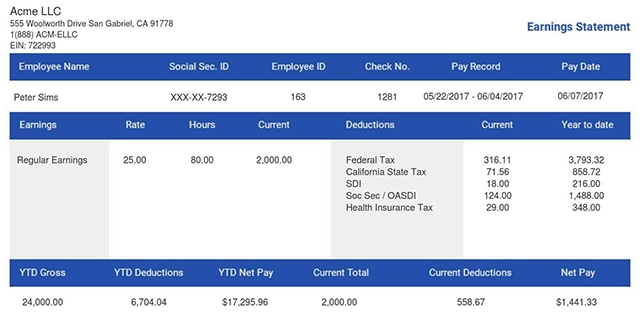
Under an accrual plan, your stub often shows hours earned, used, and left. With an unlimited plan, those balance lines usually disappear. Your salary stays the same on weeks you take off, so gross pay doesn't change, and there's no PTO balance to report.
Some payroll systems still code days off as "PTO" hours, which keeps a record even without a balance. California is stricter, since its pay stub requirements include showing available paid sick leave each payday. Landlords and lenders look at steady gross pay, not a PTO line, so a stub with no balance is normal proof of income.
Small business owners should still log every day off, since it helps with disputes, audits, and state sick leave rules. Need clean pay records for your team? You can build them with our pay stub templates.
Writing an Unlimited PTO Policy (With an Example)
New hires will ask, "How does unlimited PTO work here?" Your policy should answer that in plain words. Implementing unlimited PTO goes smoothly when the policy answers five questions: who's eligible, how to request time, how much notice is needed, when blackout dates apply, and what happens at separation. Add a suggested minimum so employees take time off without guessing.
Here's a short unlimited PTO policy example you can adapt:
"Full-time salaried employees may take paid time off as needed, with manager approval and at least two weeks' notice for absences over three days. Time off under this policy is not earned, does not accrue, and has no cash value at separation. We encourage everyone to take at least 15 days each year."
Want a starting point? Adapt a free PTO policy template, then have an employment lawyer review your final version, especially if you have staff in California.
You Might Also Like
- How Much PTO Do You Get?
- What Does a Pay Stub Look Like?
- Pay Stubs for Loan Applications
- Proof of Income Documents: 6 Times You'll Need a Pay Stub
- State Pay Stub Laws
Conclusion
So, how does unlimited PTO work in real life? It trades a fixed balance for trust. You still need approval, a coverage plan, and a clear policy, and state laws like California's can change the payout rules. For small businesses, clean records keep the plan fair.
Keep your pay records clear no matter which leave plan you run. Create accurate, professional pay stubs in minutes with our paystub generator.
- 1. Enter Your Information

- 2. Select Your Favorite Theme

- 3. Download Your Stub!

 By